How much does an alignment cost?

July 25, 2025

How much does an alignment cost?

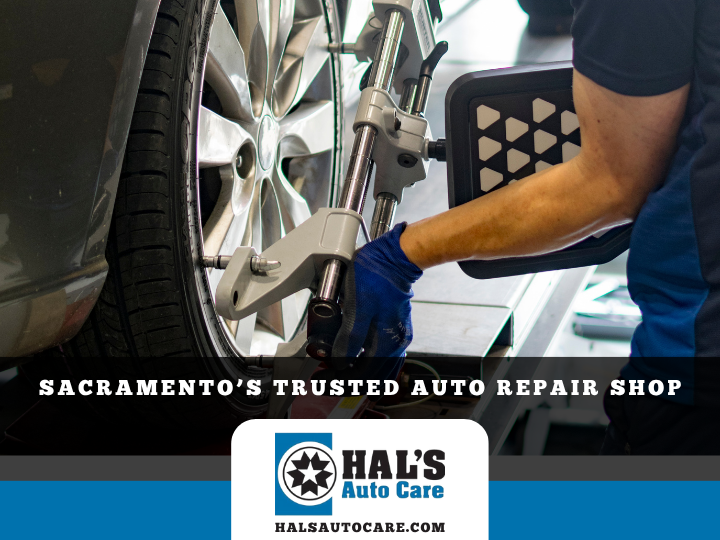
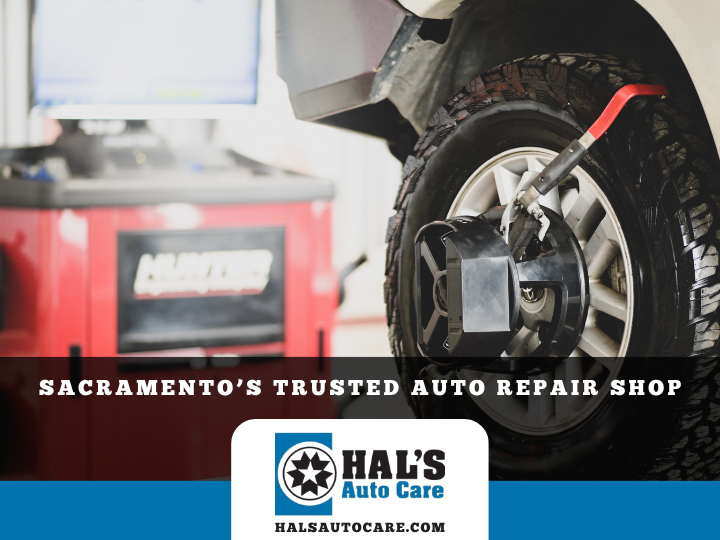
Mechanic using alignment tools on a car wheel at Hal's Auto Care in Sacramento. | Hal's Auto Care

How Much Does an Alignment Cost?


A Detailed Look at Alignment Value, Performance, and Precision in Sacramento

If your vehicle feels like it’s pulling to one side, your steering wheel isn’t centered, or your tires are wearing unevenly, chances are your alignment is off. Naturally, one of the first questions drivers ask is: “How much does a wheel alignment cost?”

At Hal’s Auto Care in Sacramento, we hear this question often—and we get it. You want answers. But the reality is, alignment pricing isn’t about a single number. It’s about what’s included, how it’s done, and how well your vehicle performs after it’s complete.

Let’s take a deep dive into the variables that influence alignment cost, what separates high-quality service from shortcuts, and why professional alignment is one of the smartest investments you can make for your vehicle.


What Is a Wheel Alignment?

A wheel alignment is the process of adjusting your vehicle’s suspension system so that your tires meet the road at the exact angles specified by the manufacturer. It has nothing to do with the wheels themselves—it’s all about the geometry of the components that hold them in place.

There are three critical angles involved:

  • Camber: The inward or outward tilt of the tires.

  • Caster: The steering axis angle that impacts stability and tracking.

  • Toe: The direction your tires point (inward or outward) from above.

When your alignment is off by even a few degrees, it can:

  • Damage tires

  • Reduce fuel economy

  • Stress your suspension

  • Decrease steering precision

  • Lead to safety hazards

Proper alignment is about more than keeping your tires straight—it’s about drivability, efficiency, and long-term performance.


Why “How Much Does It Cost?” Isn’t the Right First Question

You wouldn’t ask how much a surgery costs without knowing what’s involved, right? The same applies to wheel alignment.

At Hal’s Auto Care, we focus on value over shortcuts. We don’t give you a generic price because we don’t deliver generic service. Your vehicle, your suspension condition, and your driving habits all influence how alignment should be approached.

Here’s what actually affects the cost of an alignment:


1. Two-Wheel vs. Four-Wheel Alignment

There are two primary types of alignment:

  • Two-Wheel (Front-End) Alignment: Typically used for vehicles with a solid rear axle.

  • Four-Wheel Alignment: Required for most modern vehicles, including those with independent rear suspension or all-wheel drive.

A four-wheel alignment involves more angles, more precision, and more time. While it may be more involved, it also ensures all four tires are working together—especially important for fuel economy, handling, and tire longevity.


2. Vehicle Type, Design & Technology

Every vehicle is built differently. A compact commuter car and a lifted 4x4 have very different alignment needs.

Considerations that affect alignment complexity:

  • European and luxury vehicles often have tighter tolerances and may need specialized tools.

  • Performance vehicles require high-precision alignment to maintain speed stability.

  • Lifted, lowered, or customized vehicles often need custom alignment specs beyond factory recommendations.

  • ADAS-equipped vehicles (Advanced Driver Assistance Systems like lane-keep assist) may require sensor recalibration post-alignment.

The more complex the build, the more advanced the alignment process needs to be.


3. Current Condition of Suspension and Steering

A quality alignment can’t be done if the suspension system is worn or damaged. That’s why every professional alignment at Hal’s Auto Care starts with a complete inspection.

We check:

  • Tie rods

  • Ball joints

  • Control arms

  • Bushings

  • Struts and shocks

If we find worn components, we’ll walk you through what’s happening and why it matters. We won’t perform an alignment unless your vehicle can actually hold it. That’s how you protect your investment—and your safety.


4. Precision Tools & Alignment Technology

A $50 alignment done with outdated tools isn’t a deal—it’s a liability.

At Hal’s Auto Care, we use state-of-the-art computerized alignment systems that provide:

  • Real-time camber, caster, and toe readings

  • Factory specifications matched by VIN

  • Laser-guided accuracy to within tenths of a degree

  • Before-and-after printouts for transparency

That means your alignment isn’t just “within range”—it’s exact.


5. What’s Included in the Service

The biggest price difference usually comes down to what you’re actually getting. Some shops offer bare-minimum alignments that don’t address underlying issues or verify results.

At Hal’s Auto Care, our professional alignment service includes:

  • Full steering and suspension inspection

  • Factory-spec camber, caster, and toe adjustments

  • Computerized four-wheel alignment (when required)

  • Test drive and handling verification

  • Alignment report and documentation

  • Recommendations for any related repairs (if needed)

You’re not paying for guesswork. You’re paying for confidence, precision, and peace of mind.


What Happens If You Delay an Alignment?

Postponing an alignment can have compounding effects on your vehicle:

  • Tires: Misalignment causes uneven wear, reducing tire life dramatically.

  • Fuel: Poor alignment creates drag and rolling resistance, lowering MPG.

  • Suspension: Excessive stress on bushings and joints leads to premature failure.

  • Safety: Steering instability, pull, and poor responsiveness can become dangerous—especially at highway speeds.

Waiting too long doesn’t just cost money—it costs control.


Signs You Might Need an Alignment

If you’re experiencing any of the following, it’s time for a checkup:

  • Vehicle drifts left or right on a straight road

  • Steering wheel is off-center

  • Vibrations or shakiness at high speeds

  • Uneven or rapid tire wear

  • You hit a pothole, curb, or debris

  • You recently replaced suspension components

  • It’s been 12,000+ miles or over a year since your last alignment

Even if things “feel fine,” subtle misalignment can erode performance over time.


Why Sacramento Drivers Trust Hal’s Auto Care

We’re not just another repair shop—we’re a local team committed to precision and trust. For decades, Hal’s Auto Care has been the go-to shop in Sacramento for drivers who want real results—not bandaid fixes.

What makes us different:

  • ASE-certified technicians trained in modern alignment systems

  • Honest diagnostics, not upsells

  • State-of-the-art digital tools and alignment racks

  • Integrity-first service with transparent reporting

  • A reputation built on doing it right the first time

We take alignment seriously—because we know what’s riding on it.


Schedule Your Alignment Today

If your vehicle isn’t driving quite right—or you simply want to extend the life of your tires and suspension—schedule a professional alignment with the experts at Hal’s Auto Care.

📍 Hal’s Auto Care
2425 Tower Ave, Sacramento, CA 95825
📞
(916) 485-9215
🌐
https://halsautocare.com/services/

Get aligned. Drive safer. Protect your investment—starting today.

For more information please watch the video
https://youtu.be/9QHVqDgyIyM


March 13, 2026
What Does It Mean When My Car Pulls to One Side
March 9, 2026
Why is my car leaking coolant?
March 6, 2026
I need brakes
March 2, 2026
Why is my temperature light on?
By Hal's Auto Care February 28, 2026
Experience expert auto AC repair at Hal's Auto Care in Sacramento, CA. Stay comfortable on the road. Schedule an online appointment now!
February 27, 2026
My check engine light is on
February 23, 2026
What Does It Mean If Your Car Won’t Start but the Lights Work
February 20, 2026
Can I Drive With a Burning Smell
February 16, 2026
GDI Carbon Buildup: Why Modern Engines Slowly Lose Power, Efficiency, and Reliability Gasoline Direct Injection (GDI) engines are now standard in many modern vehicles. Manufacturers adopted this technology to improve fuel efficiency, increase power output, and meet strict emissions standards. On paper, GDI engines represent progress. In real-world driving conditions, however, they introduce a persistent and unavoidable issue: carbon buildup. Drivers often notice the symptoms gradually—rough idle, hesitation, reduced power, or unexplained check engine lights. These issues are commonly misdiagnosed as ignition or fuel system problems, when the true cause lies hidden inside the intake system. In regions like Sacramento and the surrounding Central Valley, where traffic congestion, heat, short trips, and extended idling are common, carbon buildup develops faster than many drivers expect. Understanding how GDI carbon buildup forms, why it impacts performance so severely, and what can be done to address it is critical to protecting your engine over the long term. How GDI Engines Differ From Traditional Fuel Injection Older port fuel injection systems spray fuel into the intake manifold. As air and fuel mix, gasoline flows over the intake valves, naturally cleaning away oil vapor and residue before entering the combustion chamber. GDI engines operate differently. In a Gasoline Direct Injection system, fuel is injected directly into the combustion chamber at extremely high pressure. This allows for precise fuel control and improved efficiency, but it completely removes the cleaning effect that fuel once provided to the intake valves. As a result, intake valves are exposed to oil vapor and exhaust residue with no natural cleaning mechanism. Over time, carbon deposits form, harden, and restrict airflow. Why Carbon Buildup Is a Built-In Reality of GDI Engines Carbon buildup is not caused by neglect, poor driving habits, or low-quality fuel alone. It is a direct consequence of modern engine design and emissions strategies. No Fuel Contact on Intake Valves Because fuel never touches the intake valves in a GDI engine, oil vapor sticks directly to the valve surfaces and begins accumulating almost immediately. Crankcase Ventilation Oil Vapors All engines produce blow-by gases that contain oil vapor. These gases are routed back into the intake system through the PCV system to reduce emissions. In GDI engines, this oil vapor coats intake components instead of being burned off. Exhaust Gas Recirculation Many modern engines recirculate exhaust gases back into the intake stream. These gases contain soot and carbon particles that accelerate deposit formation. Sacramento Driving Conditions Drivers throughout Sacramento, Arden-Arcade, Carmichael, Citrus Heights, Elk Grove, and surrounding areas frequently encounter stop-and-go traffic, short commutes, extended idling, and extreme heat. These conditions prevent deposits from being naturally reduced and allow carbon buildup to progress faster. How Carbon Buildup Affects Engine Performance Carbon buildup does not usually cause sudden failure. Instead, it degrades performance gradually, often going unnoticed until drivability issues become persistent. Rough Idle and Engine Vibration Restricted airflow disrupts stable combustion at idle, causing shaking, stumbling, or uneven engine operation—especially noticeable at stoplights or in traffic. Hesitation and Throttle Delay Carbon-coated intake valves create turbulent airflow, leading to delayed throttle response and hesitation during acceleration. Loss of Power Under Load Engines rely on unrestricted airflow to produce power. Carbon buildup limits airflow, reducing horsepower and torque, particularly during highway driving or when climbing grades. Reduced Fuel Efficiency Inefficient combustion forces the engine to work harder to maintain performance, increasing fuel consumption without improving output. Check Engine Light and Misfires As deposits worsen, combustion becomes unstable, leading to misfires and fault codes related to air-fuel imbalance or ignition timing. Why Carbon Buildup Accelerates Over Time Once carbon deposits begin forming, the problem compounds. Rough, uneven surfaces trap additional oil vapor and soot more easily than clean metal. This causes buildup to accelerate rather than stabilize. Over time, deposits harden and become increasingly difficult to remove, making early intervention critical. Long-Term Risks of Ignoring GDI Carbon Buildup Intake Valve Sealing Problems Heavy carbon deposits prevent intake valves from sealing properly, reducing compression and increasing internal wear. Turbocharger Stress Turbocharged GDI engines are especially vulnerable. Restricted airflow forces the turbocharger to work harder, increasing heat and wear. Catalytic Converter Damage Misfires caused by carbon buildup allow unburned fuel to enter the exhaust system, overheating and damaging the catalytic converter. Shortened Engine Lifespan Poor combustion increases internal temperatures and accelerates wear on pistons, rings, and bearings, reducing overall engine longevity. Why Fuel Additives Do Not Solve GDI Carbon Buildup Many drivers attempt to address carbon buildup using fuel additives or injector cleaners. While these products may clean fuel injectors, they cannot clean intake valves in GDI engines . Because fuel never passes over the intake valves, additives poured into the fuel tank never reach the area where carbon buildup occurs. Relying on these products delays proper service while deposits continue to grow unnoticed. Effective Methods for Removing GDI Carbon Buildup Intake Valve Cleaning Professional intake valve cleaning physically removes hardened carbon deposits from intake valves and ports, restoring proper airflow and combustion efficiency. Walnut Shell Blasting Walnut shell blasting uses finely crushed walnut shells to safely remove carbon without damaging metal surfaces. This method is widely regarded as the most effective solution for moderate to severe buildup. Chemical Intake Treatments Chemical treatments may soften light deposits but are generally ineffective against hardened carbon and often require repeated applications. When Should Carbon Buildup Be Addressed? There is no universal mileage interval for carbon cleaning. Buildup depends on engine design, driving habits, and climate. Drivers experiencing rough idle, hesitation, power loss, or recurring misfire codes should have the intake system inspected promptly. Addressing the issue early prevents secondary damage and restores performance more effectively. Slowing the Progression of Carbon Buildup While carbon buildup cannot be completely eliminated in GDI engines, proactive strategies can slow its development. Consistent Highway Driving Sustained highway speeds help raise combustion temperatures and reduce moisture and oil vapor accumulation. Proper Oil Maintenance Using high-quality oil and maintaining appropriate service intervals reduces oil vapor entering the intake system. PCV System Health A properly functioning PCV system limits excessive oil contamination. Preventative Inspections Routine inspections allow buildup to be identified before symptoms become severe. Why Accurate Diagnosis Is Critical Carbon buildup often mimics ignition or fuel delivery problems. Replacing spark plugs, coils, or sensors without inspecting the intake system leads to repeated failures and unnecessary repairs. A complete diagnostic approach ensures the true cause of performance issues is identified and corrected. Professional GDI Carbon Cleaning in Sacramento, CA Drivers throughout Sacramento, Arden-Arcade, Carmichael, Citrus Heights, Elk Grove, Rancho Cordova, and surrounding communities face driving conditions that accelerate carbon buildup. Hal’s Auto Care, located at 2425 Tower Ave in Sacramento, CA , provides professional diagnostics and intake valve cleaning services specifically designed for modern GDI engines. Their team understands the complexities of direct injection technology and focuses on restoring airflow, drivability, and long-term engine reliability rather than applying temporary fixes. Phone: (916) 485-9215 Website: https://halsautocare.com/services/ Final Thoughts: GDI Engines Depend on Clean Airflow GDI engines deliver impressive power and efficiency—but only when airflow is unrestricted. Carbon buildup is an unavoidable reality of modern engine design, not a rare anomaly. Drivers who recognize the symptoms early and address the issue properly enjoy smoother performance, improved reliability, and longer engine life. Ignoring carbon buildup allows minor airflow restrictions to become major mechanical problems. For drivers across the Sacramento region, proactive care is the key to keeping modern engines operating the way they were engineered to perform. You can watch the video https://youtu.be/jI2GzkG8Xyw
February 13, 2026
Is It Safe to Drive With Brakes Grinding
More Posts