Why is my car leaking coolant?
Why is my car leaking coolant?
Why Is My Car Leaking Coolant?
A Complete, High-Authority Guide for Sacramento Drivers
A coolant leak is never harmless. It’s never random. It’s never something that “works itself out.” A coolant leak is a direct warning that your engine’s protection system is failing — and the longer you ignore it, the more expensive the consequences become.
Most drivers only react when the temperature gauge spikes or steam rolls out from under the hood. But coolant leaks begin much earlier: a faint sweet smell, a small colorful puddle on the driveway, a heater that isn’t quite as warm as it used to be, or a coolant level that mysteriously keeps dropping.
For drivers across Sacramento, Arden-Arcade, Carmichael, Fair Oaks, and the surrounding areas, coolant leaks are especially common due to heat exposure, highway traffic, aging vehicles, and environmental stress from California’s climate.
This guide will give you everything you need to understand:
- What coolant actually does
- The most common causes of coolant leaks
- Early warning signs
- Why leaks are dangerous
- Why Sacramento’s conditions make leaks more common
- How professional technicians diagnose the problem
- What to do next
This is the level of clarity and depth every driver deserves.
What Coolant Actually Does (And Why Losing It Is a Major Problem)
Coolant is more than colored fluid. It performs several essential functions inside the engine.
1. It Regulates Engine Temperature
Engines produce extreme heat. Coolant absorbs and carries this heat to the radiator.
2. It Prevents Freezing
Even in Sacramento, early-morning winter temperatures can stress engines. Proper coolant prevents internal freezing.
3. It Protects Against Corrosion
Coolant contains additives that prevent rust and scale inside the radiator, water pump, heater core, and engine passages.
4. It Lubricates Components
Coolant lubricates seals, pump bearings, and internal surfaces to prevent wear.
When coolant leaks, the engine loses temperature control, internal lubrication, corrosion protection, and system pressure — the essential elements of engine survival.
The Most Common Reasons Your Car Is Leaking Coolant
Coolant leaks come in two forms:
External leaks — visible under the vehicle
Internal leaks — hidden inside the engine
Internal leaks are the most dangerous because they cause long-lasting damage before drivers notice anything is wrong.
Here are the primary sources.
1. Radiator Hose Leaks
Radiator hoses carry hot pressurized coolant. Over time, they become brittle, swollen, cracked, or loose at the clamps.
Signs:
- Brightly colored puddles
- Steam from under the hood
- Sweet smell
- Visible cracks or deformation
This is one of the most common coolant leak sources in Sacramento due to heat and age.
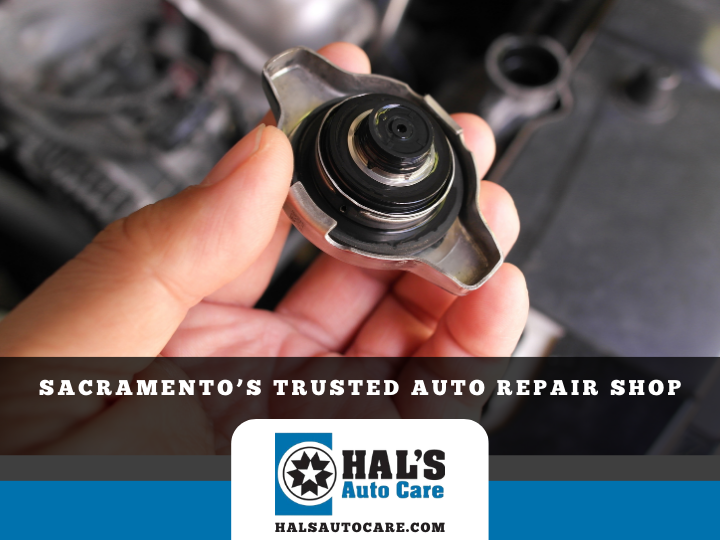
2. Radiator Cap Failure
The radiator cap regulates pressure. If it weakens, coolant pushes out through the overflow or leaks from the cap itself.
Signs:
- Coolant around cap area
- Temperature gauge rising
- Overflow tank filling excessively
A failed cap compromises the entire cooling system.
3. Radiator Leaks
Sacramento’s heat accelerates radiator wear. Corrosion, vibration, road debris, and age all contribute to cracks and pinholes.
Signs:
- Leaks at the front of the vehicle
- White or green crust on radiator fins
- Overheating in traffic
A failing radiator often shows subtle signs before a major leak occurs.
4. Water Pump Leaks
The water pump circulates coolant. When its internal seals wear out, coolant leaks from the pump housing.
Signs:
- Coolant dripping from center front of engine
- Grinding or whining noises
- Overheating at idle
- Steam under the hood
A water pump leak always gets worse over time — never better.
5. Cracked Coolant Reservoir
Plastic reservoirs expand and contract thousands of times over their lifespan. Sacramento’s high-heat summers accelerate this failure.
Signs:
- Coolant on or under the tank
- Hairline cracks
- Rapid coolant loss
Reservoir leaks are extremely common in vehicles between 8–15 years old.
6. Heater Core Leaks
Your heater core is a mini radiator inside the dashboard. When it leaks, it affects both engine cooling and cabin comfort.
Signs:
- Foggy interior windows
- Sweet smell in cabin
- Damp passenger floor
- Weak heat
This is one of the most overlooked but serious leaks.
7. Thermostat Housing Leaks
Plastic thermostat housings warp or crack due to heat cycles.
Signs:
- Coolant on engine block
- Temperature fluctuations
- Overheating after warm-up
Thermostat leaks mimic hose or radiator leaks and require professional inspection.
8. Intake Manifold Gasket Leaks
Certain engines circulate coolant around the intake manifold. When the gasket fails, coolant escapes internally or externally.
Signs:
- Coolant pooling on top of engine
- White smoke
- Misfires
- Slow coolant loss
Internal coolant leaks cause long-term damage if ignored.
9. Head Gasket Failure
This is the most severe form of coolant leak. A damaged head gasket allows coolant to enter the combustion chamber or mix with oil.
Signs:
- Thick white exhaust smoke
- Milky oil
- Overheating
- Bubbles in coolant reservoir
- Rapid coolant loss with no external leak
A head gasket leak requires immediate professional intervention.
10. Freeze Plug Leaks
Freeze plugs seal engine block coolant passages. They corrode or fail from old coolant or metal fatigue.
Signs:
- Coolant dripping from sides or rear of engine
- Rust around plug areas
- Unexplained coolant loss
Though uncommon, freeze plug leaks cause major coolant loss quickly.
Early Warning Signs You Should Never Ignore
Coolant leaks nearly always show early symptoms that smart drivers catch before major engine damage occurs.
1. Sweet Smell
A distinct sweet odor usually means coolant is evaporating or dripping onto hot engine parts.
2. Temperature Gauge Running Hot
Even slight variations are a sign of coolant loss or circulation issues.
3. Puddles Under the Vehicle
Coolant is typically bright green, orange, pink, or yellow depending on type.
4. Poor Heater Performance
If your heater suddenly weakens, coolant may be low.
5. Steam
Any steam from the hood area signals coolant hitting hot surfaces.
6. Low Coolant Warning Light
Modern vehicles monitor coolant level and temperature.
Why Coolant Leaks Are More Common in Sacramento
Drivers in Sacramento and the surrounding areas face unique conditions that accelerate cooling-system stress.
1. High Heat Exposure
Summer temperatures throughout the Sacramento Valley frequently exceed 90–100 degrees. High heat accelerates hose breakdown, radiator wear, and gasket failure.
2. Stop-and-Go Traffic
Traffic along Watt Avenue, Howe Avenue, Fulton Avenue, Arden Way, and I-80 keeps engines at high temp with limited airflow.
3. Long Highway Runs
Commutes along I-80, Highway 50, and Business 80 create repeated heat cycles that stress cooling system components.
4. Older Vehicle Population
Sacramento has a high percentage of older vehicles — prime candidates for coolant system failures.
5. Dust and Debris
Central Valley dust clogs radiators and reduces cooling efficiency.
These factors make cooling system inspections essential for Sacramento drivers.
The Hidden Dangers of Ignoring a Coolant Leak
Many drivers top off coolant and keep going. This is the most damaging misconception about cooling systems.
Ignoring a coolant leak leads to:
1. Overheating
Engines can overheat in minutes without proper coolant circulation.
2. Blown Head Gasket
Coolant enters cylinders or mixes with oil — major internal damage.
3. Warped Cylinder Head
Excessive heat warps aluminum heads permanently.
4. Complete Engine Failure
Without coolant, the engine can seize.
5. Loss of Cabin Heat
Low coolant prevents the heater from functioning.
6. Sudden Breakdowns
Common along I-80, Highway 50, and Arden-Arcade streets during rush hour.
Cooling system failure is one of the fastest ways to destroy an engine.
Why Adding Coolant Does NOT Fix the Problem
A properly functioning cooling system is sealed. It should never lose coolant.
Topping off coolant does NOT fix:
- Hose cracks
- Leaking radiators
- Failing water pumps
- Corroded lines
- Bad gaskets
- Internal leaks
- Pressure loss
It simply masks the problem temporarily — often at the driver’s expense down the road.
How Professional Technicians Diagnose Coolant Leaks
A proper diagnosis requires more than a quick look under the hood. Professionals use powerful tools and procedures to identify leaks accurately.
1. Cooling System Pressure Testing
Pressurizes the system to reveal leaks instantly.
2. UV Dye Testing
Dye is added to coolant; leaks glow under UV light.
3. Block Testing
Detects combustion gases in coolant — critical for head gasket diagnoses.
4. Thermographic Imaging
Shows hot spots where coolant is not circulating properly.
5. Full Visual and Manual Inspection
Covers:
- Radiator
- Hoses
- Water pump
- Thermostat housing
- Heater core
- Reservoir
- Intake manifold
- Freeze plugs
6. Cooling System Flow Testing
Ensures coolant circulates properly through the system.
Accurate diagnostics save the engine — and the customer money.
When You Should Stop Driving Immediately
Pull over and shut down your engine if you experience:
- Steam
- Temperature gauge in red
- Coolant warning light
- Engine misfire combined with overheating
- Strong coolant smell
Driving during overheating can damage engine components within minutes.
Long-Term Cooling System Care
To protect the engine:
1. Replace Coolant at Proper Intervals
Old coolant becomes acidic and corrosive.
2. Inspect Hoses and Seals Regularly
Heat cycles degrade rubber over time.
3. Pressure Test the System Annually
Prevents major failures.
4. Use Only Correct Coolant
Mixing coolant types causes chemical reactions.
5. Fix Leaks Immediately
Cooling systems do not heal — they deteriorate.
Regional Driving Conditions That Stress Cooling Systems
Sacramento drivers encounter cooling-system strain due to:
- High temperatures
- Stop-and-go traffic on Fulton Ave and Arden Way
- Highway commuting on I-80 and Highway 50
- Dust and debris entering radiator fins
- Long idling during summer heat
Your cooling system works harder here than in most regions.
When to Schedule a Professional Cooling System Inspection
You should schedule service if you notice:
- Puddles
- Steam
- Temperature swings
- Low coolant light
- Weak heater
- Coolant smell
- Rapid coolant loss
Addressing leaks early prevents major damage.
Professional Coolant Leak Repair in Sacramento, CA
For expert cooling system diagnostics and repair, Hal’s Auto Care provides Sacramento drivers with clarity, honesty, and high-level technical precision.
Hal’s Auto Care
2425 Tower Ave
Sacramento, CA 95825
Phone:
(916) 485-9215
Website: https://halsautocare.com/services/
Proudly serving:
- Sacramento
- Arden-Arcade
- Carmichael
- Fair Oaks
- North Highlands
- Citrus Heights
- Downtown Sacramento
- Greater Sacramento Valley
Protect your engine. Protect your reliability. Address coolant leaks before they become catastrophic.
You can watch the video