Wheel alignment near me
Wheel alignment near me
When Your Car Pulls, Drifts, or Eats Through Tires — Your Alignment Is Speaking
There is a language your vehicle uses every single day that most drivers never learn to read. It speaks through the way your steering wheel sits a few degrees off-center when your wheels are pointed straight ahead on a flat road. It communicates through the uneven tread across your front tires — feathered and worn on one shoulder while the other edge still looks relatively healthy. It announces itself in the persistent, low-grade pull toward one side of the lane when you ease your grip on the wheel during a Sacramento freeway commute.
None of those signals are random. None of them are simply what older vehicles do. Every one of them is your alignment telling you something specific and actionable — and every mile you drive without addressing it is a mile that costs you in ways that compound quietly until they become impossible to ignore.
For drivers in Sacramento and throughout the broader Capital Region, this matters with a particular urgency. The roads you navigate daily — the arterials, the freeway systems, the urban grid — create alignment stress in ways that are specific to this region, and understanding that context is part of understanding what your vehicle actually needs.
This guide was written to give you real, substantive information. Not warnings designed to manufacture urgency around a service you may not need. Not vague statements about safety that leave you no more informed than when you started. Real information about what alignment is, what it does, what it costs you when it is wrong, and how to recognize when your vehicle is telling you it needs attention. You deserve to understand what you are deciding before you decide it.
What Wheel Alignment Actually Is — Precisely
Wheel alignment is one of the most commonly misunderstood services in routine vehicle maintenance. The term sounds straightforward — your wheels aligned, pointing in the right direction — but the technical reality is considerably more precise than that, and the details are where the real understanding lives.
Alignment refers to the specific geometric angles at which your tires make contact with the road surface. These angles are not estimates or approximations. They are engineered to exact specifications by your vehicle's manufacturer, and they govern everything from how your car handles through a corner to how evenly your tires wear to how efficiently your drivetrain moves the vehicle down the road.
There are three primary angles involved in a complete alignment evaluation:
Camber is the vertical tilt of your tire when viewed straight on from the front of the vehicle. Zero camber means the tire stands perfectly perpendicular to the road. Positive camber tilts the top of the tire outward, away from the vehicle centerline. Negative camber tilts it inward. Most modern passenger vehicles are engineered with slight negative camber to optimize the tire's contact patch during cornering loads. When camber drifts outside of its specified range — from a road impact, from worn suspension components, or from accumulated mechanical stress — it creates uneven wear across the width of the tire and reduces the vehicle's cornering stability and predictability.
Toe describes the angle of your tires when viewed from directly above the vehicle. If the front edges of your tires point toward each other, that is toe-in. If they point away from each other, that is toe-out. This is the alignment angle most responsible for premature tire wear, and it is the one that drivers most frequently discover too late. Even a fraction of a degree of incorrect toe creates a constant, continuous scrubbing effect — your tires are being dragged slightly sideways against the road surface with every single rotation of every wheel. Over thousands of miles, that scrubbing produces specific, identifiable wear patterns that cost drivers real money in tires that should have lasted significantly longer than they did.
Caster refers to the angle of your steering axis as viewed from the side of the vehicle. Think of it as the forward or rearward tilt of the line around which your front wheels pivot when you steer. Positive caster — the standard setting on virtually all modern passenger vehicles — contributes to straight-line directional stability and the natural tendency of your steering wheel to return to center after completing a turn. When caster is outside of specification, drivers describe the steering as feeling vague, wandering, or requiring constant minor corrections to maintain a straight path. On Sacramento's busy freeway systems, that steering imprecision is both fatiguing and genuinely problematic.
These three angles work as a unified system. Adjust one and it influences the others. When all three are within their specified ranges, your vehicle performs with the handling precision, fuel efficiency, and tire longevity it was engineered to deliver. When any one drifts out of range, the consequences propagate outward through your tires, your suspension components, your fuel consumption, and ultimately your safety.
What Sacramento Roads Do to Your Alignment — Year After Year
Every region has a distinct road character that shapes what its drivers' vehicles experience. Sacramento and the broader Capital Region present a specific combination of conditions that create real, recurring alignment stress — conditions worth understanding because they directly affect how often alignment issues develop and how quickly they progress when left uncorrected.
Thermal expansion and surface cracking are constant features of Sacramento's road environment. The Central Valley heat — with summer temperatures routinely exceeding one hundred degrees — causes pavement to expand, stress, and develop surface cracks that worsen with each heating cycle. The winter rain season then infiltrates those cracks and accelerates their deterioration. The result is a road surface cycle that produces consistent pavement damage throughout the metropolitan area, and the pothole and surface irregularity landscape that Sacramento drivers navigate is a direct product of this thermal stress.
Interstate 80 running through the Sacramento corridor is a primary commuter artery carrying enormous traffic volume at highway speeds. The expansion joints, lane transitions, and surface irregularities on a heavily used interstate create repeated suspension loading events — individually manageable but cumulatively significant for alignment geometry over thousands of miles.
Business 80 and the Capital City Freeway through the midtown and east Sacramento corridor are similarly significant. These routes carry daily commuter traffic and connect the neighborhoods surrounding Tower Avenue to the broader freeway network, and their combination of highway-speed sections, frequent interchange transitions, and older surface sections creates varied alignment stress across a single commute.
Highway 50 eastbound toward Rancho Cordova, Folsom, and the El Dorado Hills corridor carries significant volume from the eastern Sacramento suburbs. The transition from urban freeway to suburban arterials along this corridor, combined with the road surface conditions on the connecting surface streets, creates a mix of alignment inputs that accumulate over the driving week.
Surface streets throughout the Sacramento grid — including the Tower Avenue corridor itself, Watt Avenue, Howe Avenue, Auburn Boulevard, and the arterials connecting Sacramento to Citrus Heights, Carmichael, Fair Oaks, and Rancho Cordova — carry the full spectrum of urban road conditions. Signal-controlled intersections with repeated braking and acceleration cycles, utility cut patches, drainage infrastructure transitions, and the accumulated surface variation of active urban infrastructure all contribute to alignment stress over time.
Construction activity throughout the Sacramento metro region is persistent. The capital city's ongoing infrastructure investment creates construction transition zones — where fresh asphalt meets existing, often deteriorated surface — that are among the most common sources of sudden alignment shifts. Drivers who cross these transitions daily during a commute accumulate repeated low-level suspension inputs that add up over weeks and months.
Drivers based near Tower Avenue, Watt Avenue, Howe Avenue, and the broader northeast Sacramento corridor — and those commuting regularly toward Citrus Heights, Carmichael, Fair Oaks, Rancho Cordova, Roseville, or into downtown Sacramento — are navigating conditions that create genuine and recurring alignment stress.
The Real Cost of Misalignment — Specific and Measurable
The consequences of driving on misaligned wheels are not abstract. They are specific, measurable, and directly tied to costs that drivers end up paying whether they understand the connection or not.
Accelerated tire wear is the most immediate and financially significant consequence. Every set of tires carries a designed tread life — a projected mileage based on the assumption that your vehicle's alignment is correct. When toe is off, even modestly, the scrubbing effect it creates on the tire contact patch compresses that designed tread life dramatically and predictably.
A tire set rated for sixty thousand miles can be reduced to the replacement threshold in thirty-five thousand miles or fewer under significant misalignment. The wear pattern it produces — feathering along the tread blocks, excessive wear on one shoulder, or a scalloped, diagonal wear signature — is highly specific and clearly identifiable to a trained technician. But by the time that wear is visible, the damage is already done. The miles that should have remained on those tires are gone.
For Sacramento drivers who cover significant daily miles commuting between northeast Sacramento and the employment centers of downtown, Rancho Cordova, or Roseville, that accelerated tire wear represents a real and recurring expense that is entirely preventable.
Suspension component degradation is the longer-term consequence that tends to arrive as an unwelcome surprise. Ball joints, tie rod ends, control arm bushings, and wheel bearings are precision components designed to operate within defined geometric tolerances. When alignment is off, these components absorb lateral and angular forces they were not engineered to handle, on every road input. The accumulated stress from thousands of miles of operation outside designed tolerances shortens their service life and eventually produces repair bills that dwarf the cost of the alignment services that would have prevented the wear.
Fuel efficiency reduction is subtle but accumulates meaningfully over high-mileage driving. Incorrect toe alignment creates rolling resistance — your tires drag slightly sideways against the pavement on every wheel rotation, and your engine must work harder to overcome that resistance and maintain speed. On the sustained highway sections of I-80, Highway 50, and Business 80 that Sacramento commuters navigate daily, that efficiency reduction adds up across tens of thousands of miles to a fuel cost that most drivers never consciously connect to their wheel angles.
Handling unpredictability is the safety dimension. A vehicle that pulls consistently toward one side requires constant steering correction — correction that demands active physical input and mental attention that should not be necessary for normal driving. On I-80 at freeway speed, on the on-ramp transitions of the Capital City Freeway, or in the kind of emergency avoidance situation where steering precision matters most, a misaligned vehicle delivers a meaningfully reduced safety margin compared to a vehicle whose geometry is correct.
The Signals Your Vehicle Is Already Sending
Your vehicle does not wait for a scheduled service appointment to communicate alignment problems. The signals are present in your daily driving experience — consistent, specific, and informative if you know how to read them.
Pulling or drifting to one side is the most commonly recognized symptom and the one most drivers notice first. On a straight, level road, your vehicle should maintain its direction with minimal steering input when you ease your grip on the wheel. If it consistently moves toward the right or left, alignment deserves attention. Note that most roads have slight crown — a subtle arc from center to edge for water drainage — which can produce minor drift even in well-aligned vehicles. But persistent, deliberate pulling to one side, reproducible across different road surfaces, is not a road condition issue. It is an alignment issue.
A steering wheel that sits off-center when you are driving straight is a reliable and easily observable indicator. Your steering wheel's center marking should sit level and square when your wheels are pointed straight ahead. If it is visibly rotated — even by a modest amount — your alignment angles have shifted from their correct settings.
Uneven tire wear across the tread width tells a clear story when you know how to read it. Run your hand across your front tires from the inside edge to the outside edge. If the wear depth is noticeably different from one side of the tread to the other — one shoulder worn significantly more than the other — alignment is almost certainly contributing. Feathering, where the tread blocks feel smooth on one edge and relatively sharp on the other when you drag your fingers perpendicular to the tread direction, is a specific indicator of toe misalignment.
Steering vibration at highway speed can have multiple causes — wheel balance issues are the most common — but alignment problems can create or worsen this symptom. If your steering wheel shakes noticeably at freeway speed on I-80 or Highway 50, a comprehensive inspection that evaluates both wheel balance and alignment is the appropriate starting point.
A vague, wandering steering feel — the sense that your vehicle does not respond with crisp, confident precision and requires constant minor corrections to stay on track — often reflects caster misalignment or worn steering components that compromise the geometry's stability and return-to-center behavior.
Any change in handling immediately following a road impact is the clearest call to action. If you struck a significant pothole on Watt Avenue, hit a curb pulling out of a parking lot on Howe Avenue, or drove over road debris on I-80 and noticed an immediate shift in how your vehicle handles or steers, alignment should be inspected without delay. Early inspection catches alignment shifts before secondary wear on suspension and steering components compounds the cost and scope of the issue.
What a Thorough Alignment Service Actually Involves
Understanding the service process helps you recognize genuine professional work when you receive it — and identify when a process is being shortcut in ways that compromise the quality and longevity of the result.
A proper alignment service begins before any measurement equipment is attached to your vehicle. A competent technician inspects your suspension and steering components first — checking tie rod ends, ball joints, control arm bushings, and wheel bearings for wear or damage that would prevent the alignment from holding after adjustment. This inspection step is not optional. An alignment performed on worn suspension or steering components will not hold. The geometry cannot be maintained by components that are beyond their service limits, and the conditions that caused premature wear will continue to operate unchecked if the root cause is not identified.
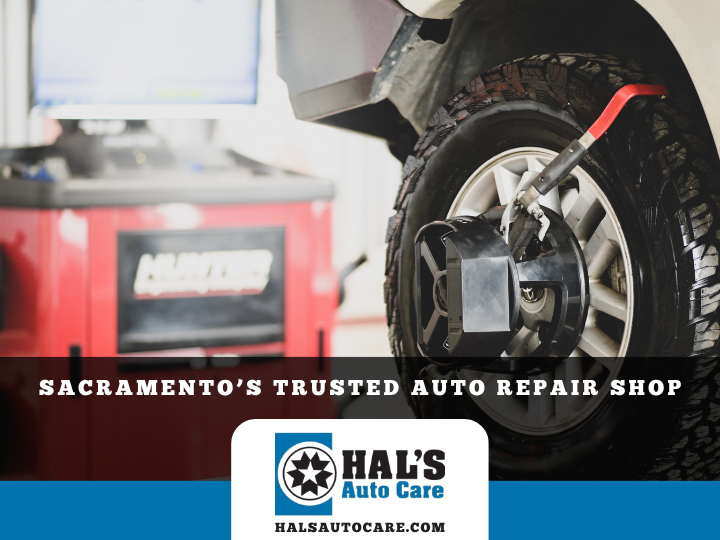
With the suspension confirmed in serviceable condition, your vehicle is driven onto a precision alignment rack. Modern alignment systems use sensors or optical targets attached to each wheel to generate accurate measurements of your current camber, toe, and caster angles — each value compared against your vehicle manufacturer's published specifications for your specific year, make, and model.
The technician then makes the adjustments the measurements indicate are needed. Toe is typically adjusted by threading tie rod ends in or out — a precise mechanical adjustment that directly controls the angle at which your front tires point. Camber adjustment depends on your vehicle's design; some vehicles provide factory-adjustable camber through eccentric bolts or slotted mounting points, while others require aftermarket hardware to allow any adjustment. Caster is often fixed on many modern vehicles and is not adjustable without changing suspension geometry.
After adjustments, a final measurement set confirms that all angles are within the manufacturer's specification range. A transparent, quality-focused shop provides a printed alignment report showing your before and after angle measurements — documentation that the work was performed, the geometry was verified, and the specific corrections made are on record.
Alignment and Tires — The Connection That Determines What You Actually Pay
The relationship between tire installation and alignment confirmation is one of the most financially consequential connections in routine vehicle maintenance, and one that far too many drivers discover too late.
Every set of tires is manufactured with a designed tread life. That design assumes correct alignment. When new tires are installed on a vehicle with misaligned wheels, the accelerated wear begins immediately — from the first mile. It is invisible at first. There is no warning light, no obvious symptom, no moment where the damage is self-evident. But the tread is being consumed at an accelerated rate, and by the time the wear pattern becomes visible, a meaningful portion of the tire's designed service life has already been spent.
The most direct way to protect a new tire investment is confirming that alignment is correct at the time of installation. This one step ensures that every mile of tread life the tires were designed to deliver is actually available to you. Skipping it — to save a modest amount of time or a small amount of money at the moment of installation — is a decision that consistently costs more in the long run than the amount saved.
Tire rotation is related and important, but it cannot substitute for alignment correction. Rotation equalizes wear across all four positions on the vehicle. But if toe is incorrect, rotation moves the wear to new positions without addressing the cause. Alignment correction is the only resolution for alignment-caused wear.
Alignment and Driver Assistance Technology — What Most Drivers Do Not Know
As driver assistance and safety technologies become increasingly standard across all vehicle segments and price categories, the relationship between alignment and the function of those systems becomes increasingly important — and increasingly overlooked.
Lane departure warning, lane keep assist, automatic emergency braking, adaptive cruise control, and blind spot monitoring systems are calibrated around a specific geometric reference that includes your vehicle's properly aligned wheels and the sensors and cameras mounted to your vehicle's structure. When alignment shifts significantly, these systems may generate false alerts, misinterpret lane geometry or obstacle positions, or respond imprecisely to real driving situations.
Vehicles with front-facing cameras or radar units — which describes a growing majority of vehicles across all price categories — may require sensor recalibration following significant alignment correction. This process, known as ADAS calibration, reestablishes the geometric reference these systems depend on to function as designed.
For Sacramento drivers whose daily freeway commutes involve lane keep assist and adaptive cruise control for extended periods on I-80, Highway 50, or Business 80, having these systems calibrated and functioning correctly is a genuine safety consideration — not a peripheral detail.
How Often Alignment Warrants Attention for Capital Region Drivers
Annual alignment checks represent a reasonable starting baseline for drivers operating under typical conditions. For Sacramento-area drivers who cover significant miles across the Capital Region's road network — commuting on I-80, Highway 50, and the urban grid, navigating toward Citrus Heights, Carmichael, Fair Oaks, Rancho Cordova, Roseville, or Elk Grove — treating that annual baseline as a minimum rather than a maximum is a sound approach.
Beyond the calendar, these specific circumstances should prompt an alignment inspection regardless of when the last one occurred:
Any significant road impact — a hard pothole strike, curb contact, or collision, even when no obvious mechanical damage is visible afterward.
New tire installation. Start the investment on a verified-correct foundation from mile one.
Replacement of any suspension or steering component — ball joints, tie rod ends, control arms, struts. Any of these affect alignment geometry when replaced, and alignment confirmation belongs in the same service visit.
Any noticeable and persistent change in handling, steering feel, or tire wear pattern — including changes that developed gradually rather than from a single identifiable event.
Serving Northeast Sacramento and the Capital Region
Drivers throughout the Tower Avenue corridor and the broader Sacramento area — including those traveling from Citrus Heights, Carmichael, Fair Oaks, Rancho Cordova, Arden-Arcade, and Roseville — deserve alignment service that combines precision measurement, thorough inspection, and a genuine commitment to the vehicle's long-term performance and safety.
At Hal's Auto Care, located at 2425 Tower Ave in Sacramento, alignment service begins with a complete suspension and steering inspection before any measurements are taken, uses computerized alignment equipment to generate accurate before-and-after documentation, and is performed by technicians who understand what correct geometry actually means for tire longevity, fuel efficiency, and safe vehicle behavior on Capital Region roads.
The commitment here is not to sell a service. It is to make sure your vehicle is performing correctly and safely, and to give you the specific, honest information you need to make the best decisions for your vehicle — because that is what genuinely having your best interest at heart actually looks like in practice.
To schedule your alignment inspection or ask questions about your vehicle's needs, call Hal's Auto Care at (916) 485-9215 or visit halsautocare.com.
The Foundation That Holds Everything Together
Every aspect of your vehicle's performance is built on the relationship between your tires and the road. Handling. Fuel efficiency. Tire longevity. Component service life. Safety system function. All of it depends on that foundational relationship being correct — and alignment is what keeps it correct.
When alignment is right, your vehicle delivers what it was engineered to deliver. When it is off — even by margins that are invisible without precision measurement equipment — everything built on top of that foundation is quietly compromised. Not always dramatically. Not always immediately. But consistently, progressively, and eventually in ways that produce consequences that far exceed what straightforward alignment maintenance would have cost.
The roads of Sacramento and the Capital Region are not gentle on your suspension geometry. The thermal cycling that cracks and heaves pavement through hot summers and wet winters. The freeway expansion joints and urban surface irregularities that create repeated suspension inputs on every commute. The construction transitions that appear overnight on routes you drive every day.
None of that is within your control. What is within your control is paying attention to the signals your vehicle sends — and taking deliberate, informed action when those signals appear.
Your alignment is the foundation. Protect it, and everything your vehicle was designed to give you stays within reach.
You can watch the video