Brakes Grinding in Sacramento? | Hal’s Auto Care
Brakes Grinding in Sacramento? | Hal’s Auto Care
Brakes Grinding in Sacramento? Why a Complete Brake Job Matters More Than a Pads-Only Special
You hear grinding when you stop, and you start making calls. One place quotes a low price for new pads. Another recommends pads, rotors, hardware, and a fluid service, and the number is quite a bit higher. Now you’re stuck wondering whether the second shop is overselling you, or whether the first one is setting you up to hear that grinding again in a few months.
If your brakes are grinding in Sacramento, the honest answer to that question depends on what your brakes actually need, and that’s something only an inspection can tell you. Sometimes pads alone are the right fix. But once brakes have been grinding, the rotors, hardware, and calipers are often involved too, and skipping them can leave you with noise, uneven wear, and another repair far sooner than you expected. On older vehicles, years of heat and stop-and-go driving can add aged brake hoses and worn-out fluid to the list.
At Hal’s Auto Care, we’ve been family-owned since 1979, and our approach is simple: tell you what matters now, what can wait, and why. This guide explains what grinding means, what a complete brake job includes and when you need one, and how to make a smart decision, especially on an older vehicle you plan to keep.
What That Grinding Sound Usually Means
Brake pads have a layer of friction material bonded to a steel backing plate. Each stop wears a little of that material away. Many pads include a small metal tab that squeals when they get thin, an early warning that replacement is coming due. When the friction material is completely gone, the steel backing plate grinds directly on the rotor, the metal disc that spins with the wheel.
That grinding is the sound of damage happening. The backing plate cuts into the rotor, stopping distances increase, and the caliper piston has to extend farther than it should.
Not every grinding sound means worn pads. After a rare rainy morning or a car wash, a short scrape on the first few stops is usually surface rust coming off the rotors. A scrape while you’re not braking can be a stone caught behind the rotor. A growl that changes as you turn may be a wheel bearing. An inspection sorts out which one it is before anyone talks about price.
Pads Only Versus a Complete Brake Job
When Pads Alone Can Be the Right Fix
If the pads are worn but haven’t reached the grinding stage, the rotors are within their minimum thickness and in good condition, and the calipers are moving freely, replacing only the pads can be a perfectly sound repair. In that situation, recommending more would be overselling, and a trustworthy shop will tell you that.
Why Grinding Usually Changes the Answer
Once brakes have been grinding, the situation is different. The backing plates have usually scored the rotors, sometimes deeply. New pads on scored or worn rotors don’t make full contact, which can mean reduced braking, noise, vibration, and pads that wear out quickly. Many rotors are thin enough that resurfacing them would take them below their minimum safe thickness, so replacement is the right call.
The Parts a Pads-Only Special Often Skips
A complete brake job typically includes more than pads and rotors. The caliper slides and pins should be cleaned and lubricated so the caliper moves freely. The clips and hardware that hold the pads in place often wear or lose their spring and should be replaced. The calipers should be checked for sticking or leaking. Brake fluid condition should be checked, and the fluid replaced if it’s worn out.
When those steps are skipped, the new pads can stick, wear unevenly, squeal, or grind again sooner than they should. A low price that leads to a repeat repair isn’t really a savings.
How to Compare Two Brake Quotes Fairly
Ask each shop what was measured and what was found. How thick are the pads on each wheel, inner and outer? What do the rotors measure compared to their minimum? Are the calipers moving freely? What’s the condition of the fluid? What does the quote include, and what does it leave out? A quote backed by measurements is easier to trust than one built around a price.
Brakes on Older Vehicles
Many Sacramento families keep their vehicles a long time, and older vehicles need a little more attention when the brakes are serviced.
Brake Hoses Age
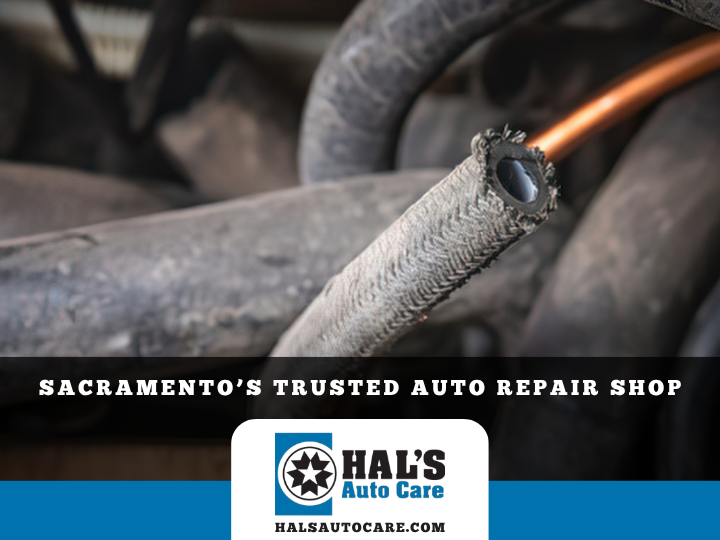
The flexible rubber hoses that carry brake fluid to each wheel age with time and heat. Older hoses can crack on the outside or deteriorate on the inside, which can cause a soft pedal, a caliper that won’t fully release, or a leak. On an older vehicle, brake hoses should be inspected every time the brakes are serviced.
Brake Fluid That’s Never Been Changed
Brake fluid absorbs moisture from the air over time, which lowers its boiling point and can contribute to internal corrosion in brake parts. On older vehicles, the fluid has often never been replaced. Dark, contaminated fluid is a sign it’s due. Fresh fluid helps protect calipers, lines, and the antilock brake system, which is far more expensive to repair than the fluid is to replace.
Calipers That Have Done Their Time
Calipers can stick or leak with age, especially after years of heat. A sticking caliper keeps the pad pressed against the rotor, which causes uneven wear, heat, a pull to one side, and often grinding on that wheel. On an older vehicle, it’s common to find one caliper that needs attention when the brakes are serviced.
Is a Brake Job Worth Doing on an Older Car?
In most cases, yes. Brakes are among the most important safety systems on any vehicle, and a properly done brake job on a well-maintained older vehicle is a sound investment that delivers many more miles of safe driving. If your vehicle has larger problems and you’re weighing whether to keep it, our earlier article on [link to Hal’s Should I Replace My Vehicle blog] walks through that decision. But brakes alone are rarely the reason to give up on a vehicle that’s otherwise in good shape.
How Sacramento Driving Wears Brakes
Sacramento is flat, but that doesn’t mean easy on brakes. Stop-and-go traffic on Watt Avenue, Fulton Avenue, Arden Way, and El Camino Avenue means constant braking, and every stop wears the pads a little more. Commuters heading to Rancho Cordova on US 50 or to Roseville on I-80 deal with sudden slowdowns that call for hard stops.
Heat adds to the wear. On a hot summer afternoon, brakes start every stop warmer than they would on a cool day, and repeated stops in traffic can raise temperatures further. Excess heat can glaze pads and contribute to uneven rotor wear. And when Sacramento drivers head up I-80 or US 50 into the Sierra, long descents ask the brakes to absorb heat for miles at a time. Using a lower gear on those descents, where your vehicle allows, helps protect the brakes.
Local driving through Carmichael and Fair Oaks along Fair Oaks Boulevard, or errands around Citrus Heights and North Highlands, involves plenty of signals and short trips. Vehicles driven mostly that way often wear their brakes faster per mile than highway commuters, which is why brake inspections should follow how you drive rather than a fixed mileage number.
Now, Soon, or Later: Prioritizing Brake Work
Some brake findings need attention immediately: grinding on every stop, a pedal that feels soft or sinks, a brake warning light, a car that pulls hard to one side when braking, or a leaking caliper or hose. Those affect your ability to stop.
Others are worth scheduling soon: pads approaching the end of their life, rotors near their minimum, or fluid that’s dark and overdue. Taking care of these before they turn into grinding keeps the repair simpler.
And some things can be watched: light surface rust that clears after a few stops, or pads with plenty of life left. We’ll tell you which category your brakes fall into so you can plan the work without guessing.
What Happens If You Keep Driving on Grinding Brakes
Grinding brakes take longer to stop the vehicle, and every stop deepens the damage to the rotors. A caliper piston extended too far can stick or leak. Overheated brakes can damage fluid and other components. On a hot freeway day, or coming down from the Sierra, worn brakes have less capacity to absorb heat, which raises the risk of fade when you need them most.
The safest move is to have grinding brakes inspected right away and to avoid highway driving until you know where things stand.
What a Thorough Brake Inspection Includes
A thorough inspection starts with the wheels off. The technician measures the inner and outer pads on every wheel, measures the rotors and compares them to their minimum thickness, and checks for scoring, heat damage, and uneven wear. Calipers, slides, and hardware are checked for free movement and wear. Hoses and lines are inspected, and the fluid is checked for level and condition. A road test confirms the source of the noise.
When it’s done, you should know what was measured, what was found, and what each recommendation is for. If any part of a recommendation doesn’t make sense, ask. A good answer always connects the repair to something that was measured or observed.
What Drives the Cost of Fixing Grinding Brakes
The cost depends on what the inspection finds. Pads replaced early, before grinding, are one of the more affordable repairs on any vehicle. Once grinding has damaged the rotors, they usually need to be replaced too. Hardware, caliper work, hoses, and fluid service add to the job when they’re needed. The type of vehicle and the quality of parts also matter.
Here’s the long-term view. A complete brake job done right, with quality parts and proper hardware and lubrication, usually lasts longer, stops more consistently, and stays quieter than a pads-only job on damaged rotors. That means fewer repeat visits and a lower cost per mile over the life of the vehicle. On an older vehicle you plan to keep, that’s one of the best values in auto care. If your vehicle is still under warranty, keep records of brake service so your coverage stays protected.
How Hal’s Auto Care Handles Grinding Brakes
At Hal’s Auto Care, honest assessments come first. When your brakes are grinding, we measure, inspect, and explain what we found in plain language. If pads alone will do the job, we’ll say so. If the rotors, hardware, or calipers need attention, we’ll show you why and help you understand what matters now and what can wait.
We’ve been caring for Sacramento families’ vehicles since 1979, including the older vehicles many of our customers rely on every day. Our goal is to protect your safety and the long-term health of your vehicle. Learn more on our [link to Hal’s brake repair page].
Frequently Asked Questions
Why is one brake quote so much higher than another?
Usually because the quotes cover different work. One may include only pads, while the other includes rotors, hardware, caliper service, or fluid. Ask each shop what they measured and what their quote includes so you can compare the work, not just the price.
Can I just replace the pads if my brakes are grinding?
Usually not. Grinding means the backing plates have likely damaged the rotors, and new pads on scored rotors don’t make proper contact. That can lead to noise, reduced braking, and fast pad wear. Measuring the rotors shows whether they can stay or need replacing.
Is a brake job worth doing on an older car?
In most cases, yes. A properly done brake job on an otherwise sound older vehicle gives you many more miles of safe driving. Older vehicles often need hoses, fluid, or a caliper checked too, so a thorough inspection matters.
Is it safe to drive with grinding brakes?
Brief grinding that clears after a few stops is usually surface rust. Steady grinding means worn pads and longer stopping distances, so have the brakes inspected right away. Avoid highway driving until you know the condition of your brakes.
How often should brake fluid be changed?
It depends on the fluid’s condition, the vehicle, and how it’s driven, rather than a single fixed schedule. Fluid absorbs moisture over time, which lowers its boiling point and can contribute to corrosion. Having its condition checked during brake inspections tells you when it’s due.
How much does it cost to fix grinding brakes?
It depends on what the inspection finds. Pads replaced early are one of the more affordable repairs, while rotors, hardware, calipers, and fluid service add to the cost once grinding has done damage. A complete, correct repair usually costs less over time than repeating a partial one.
I commute on US 50 to Rancho Cordova. How often should I have my brakes checked?
Freeway driving is easier on brakes than city traffic, but sudden slowdowns and local driving still wear them. Having the brakes inspected at regular service visits, and right away if you hear squealing or grinding, is the best guide.
Get an Honest Brake Assessment in Sacramento
If your brakes are grinding in Sacramento, you deserve a clear answer about what they need, backed by real measurements. Whether that’s pads alone or a complete brake job, you’ll know exactly why. Whether you’re in Carmichael, Fair Oaks, Citrus Heights, or commuting from Rancho Cordova, we’re glad to help.
Call us, schedule a visit at [link to Hal’s schedule appointment page], or stop by the shop on Tower Avenue.
Hal’s Auto Care
2425 Tower Ave, Sacramento, CA 95825
(916) 485-9215
https://halsautocare.com/
You can watch the video