Check Engine Light Flashing in Sacramento?
Check Engine Light Flashing in Sacramento?
Check Engine Light Flashing in Sacramento? What It Means on High-Mileage Cars and Hybrids
The check engine light on your older sedan has been on, steady, for a while. You've been meaning to get it looked at. Then one afternoon on Watt Avenue, it starts blinking and the car shudders at the light. Or maybe you drive a hybrid, the light is flashing, and you don't feel much wrong at all. In both cases, you're wondering how seriously to take it.
When your check engine light is flashing in Sacramento, it almost always means a severe engine misfire, and that's serious whether you feel it or not. A misfiring cylinder sends unburned fuel into the exhaust, where it can overheat and destroy the catalytic converter. Ease off, avoid hard acceleration and freeway speeds, and have the vehicle diagnosed promptly. On a high-mileage vehicle or a hybrid, the causes and the signs can be a little different, which is why an honest diagnosis matters.
At Hal's Auto Care, we've been family-owned since 1979, and many of our customers drive vehicles they've kept for years, along with a growing number of hybrids. This guide explains what the flashing light means, why older engines and hybrids misfire, what needs attention now versus later, and how to protect your vehicle for the long run.
Steady Versus Flashing
A steady check engine light means the vehicle's computer has stored a fault that should be checked soon. A flashing light means it has detected a misfire severe enough to damage the catalytic converter. Most owner's manuals tell drivers to reduce speed and have the vehicle serviced promptly when the light flashes.
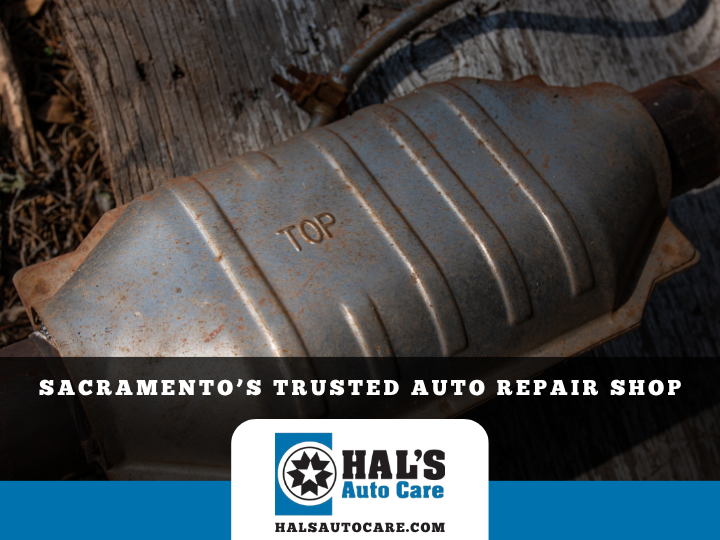
A misfire happens when a cylinder doesn't burn its air and fuel mixture properly. The unburned fuel flows into the catalytic converter, where it can burn and drive temperatures far beyond normal. The converter's internal structure can melt or break apart, which can restrict the exhaust and require replacement.
A light that has been steady for a while and then starts flashing deserves special attention. It often means a developing problem, such as a weakening coil or worn plugs, has gotten worse.
Why High-Mileage Engines Misfire
Aging Spark Plugs and Coils
Spark plugs wear gradually, and the gap that the spark jumps grows wider over time, requiring more voltage to fire. Ignition coils age with heat and use. On a higher-mileage engine, a set of worn plugs can push weakening coils past their limit, and one coil failing often causes a misfire in a single cylinder. Sacramento's hot summer afternoons add heat stress to coils and wiring under the hood.
Oil in the Spark Plug Wells
On many engines, the spark plugs sit in tubes or wells that pass through the valve cover. As the valve cover gasket or the tube seals age, engine oil can leak into those wells. Oil around the spark plug and coil boot can damage the boot and let the spark escape, causing a misfire. It's a common finding on older vehicles, and the repair addresses both the gasket and the damaged ignition parts.
Vacuum Leaks
Rubber vacuum hoses, intake gaskets, and plastic fittings harden and crack with age and heat. A crack lets in air the engine's computer didn't measure, which leans out the fuel mixture and can cause misfires, especially at idle. Older vehicles that idle roughly in traffic on Fulton Avenue or Arden Way and smooth out at speed often have a vacuum leak.
Fuel Injectors
Injectors can clog or wear over many years, spraying unevenly or delivering the wrong amount of fuel to a cylinder. That can cause a misfire in one cylinder or rough running overall.
Internal Engine Wear
On some high-mileage engines, low compression in a cylinder, from worn rings or a valve that isn't sealing, can cause a misfire. That's less common than ignition or fuel problems, but it's important to rule out before deciding on a repair, because it changes the plan.
Hybrids: Why a Misfire Can Be Easy to Miss
Hybrids combine a gasoline engine with one or more electric motors. Because the electric motor can smooth out power delivery and the engine starts and stops frequently, a misfire on a hybrid may feel less obvious than on a conventional car. Some drivers notice only a slight vibration, or nothing at all, while the light flashes.
That doesn't make it less serious. A hybrid's gasoline engine still sends unburned fuel to its catalytic converter when it misfires. Hybrids can also have a hybrid system warning or reduced power along with the check engine light, depending on the vehicle. Diagnosing a hybrid misfire uses many of the same tests as a conventional engine, plus an understanding of how the hybrid system controls when the engine runs. Hybrid repair is part of our everyday work, and you can learn more on our [link to Hal's hybrid and EV repair page].
What to Do When the Light Starts Flashing
Ease off the accelerator and avoid hard acceleration and high speeds. On I-80, US 50, or the Capital City Freeway, move to the right and exit when it's safe. If the engine is shaking hard, losing power, stalling, or you smell something hot or burning, pull over safely and arrange a tow. On a hot, dry day, avoid parking over dry grass, since an overheated exhaust can be a fire risk.
If you're planning a trip up to the Sierra, don't start it with a flashing or recently flashing light. Long climbs put the engine under heavy load, which is when misfires are most likely to return.
Now, Soon, or Later
A flashing light is a now item. A severe misfire can damage the converter quickly, so it should be diagnosed right away. A steady light that hasn't flashed is a soon item: it shouldn't be ignored, but you usually have a little time to schedule. And some findings during a diagnosis, such as a slightly seeping valve cover gasket that hasn't yet reached the spark plug wells, may be items to watch and plan for. We'll tell you which category each finding falls into so you can make sensible decisions.
What a Proper Diagnosis Includes
A proper diagnosis starts with the trouble codes and the freeze-frame data, which show conditions like engine temperature, speed, and load when the misfire was detected. Live data shows which cylinders are misfiring and how often. The technician inspects the spark plugs, coils, and boots, checks the spark plug wells for oil, and often swaps a coil to another cylinder to see whether the misfire follows. Injectors, fuel pressure, and vacuum leaks are checked, and a compression test is done when the evidence points inside the engine. If the vehicle was driven with a flashing light, the converter is checked too.
If your light is steady rather than flashing, our earlier article [link to Hal's check engine light blog] covers that situation.
Is It Worth Fixing on an Older Vehicle?
In most cases, yes. A misfire on an otherwise healthy high-mileage vehicle is usually an ignition, fuel, or gasket repair, and fixing it protects both the engine and the catalytic converter. The decision changes only when the diagnosis finds a serious internal problem, and then you deserve clear information to weigh it. Waiting is what turns a reasonable repair into a hard decision, because a ruined converter on an older car can cost a large share of what the vehicle is worth.
What Drives the Cost
The cost depends on what's causing the misfire and how long the vehicle was driven with it. Spark plugs and a single coil are among the more manageable repairs. A valve cover gasket with new coil boots, a vacuum leak, or injector work varies by vehicle and how much has to come apart. Internal engine problems are the most involved.
In California, a replacement catalytic converter must meet California Air Resources Board requirements, which often makes it more expensive than in other states. That's the strongest reason of all to respond quickly to a flashing light. Responding early keeps the repair small and the cost per mile low over the life of the vehicle. If your vehicle is still under warranty, keep records of the diagnosis and repair so your coverage stays protected.
How Hal's Auto Care Handles a Flashing Check Engine Light
At Hal's Auto Care, honest assessments come first. When your check engine light is flashing, we diagnose the cause, show you what we found, and explain clearly what needs attention now and what can wait. We work on older vehicles, newer vehicles, hybrids, and EVs, and our goal is always to protect your vehicle's long-term health without aggressive sales or alarmist claims.
Frequently Asked Questions
Can I drive with my check engine light flashing? Only gently and only as far as you need to reach safety or a shop. Avoid freeway speeds and hard acceleration. If the engine is shaking hard or losing power, pull over and arrange a tow.
My hybrid's check engine light is flashing, but it drives fine. Is it serious? Yes. Hybrids can mask a misfire because the electric motor smooths out power, but the gasoline engine is still sending unburned fuel to the catalytic converter. Have it diagnosed promptly.
Why does oil in the spark plug wells cause a misfire? Oil leaking past an aging valve cover gasket or tube seal can damage the coil boot and let the spark escape before it reaches the plug. Fixing the leak and replacing the damaged ignition parts solves it.
My light was steady for weeks and now it's flashing. What happened? A developing problem, often worn plugs or a weakening coil, has likely gotten worse. The flashing means the misfire is now severe enough to damage the converter, so have it checked right away.
Is it worth fixing a misfire on my older car? Usually, yes. Most misfires on otherwise healthy vehicles are ignition, fuel, or gasket repairs. Fixing them quickly protects the converter and avoids a much bigger expense.
How much does it cost to fix a flashing check engine light? It depends on the cause. Plug and coil repairs are usually far less expensive than injector or engine work. In California, a damaged catalytic converter adds significantly to the cost, which is why acting fast matters.
Get an Honest Diagnosis in Sacramento
If your check engine light is flashing in Sacramento, ease off and have it diagnosed right away. An honest diagnosis tells you what's wrong, what needs attention now, and how to protect your vehicle for the long run. Whether you're in Carmichael, Fair Oaks, Citrus Heights, or Rancho Cordova, we're glad to help.
Call us, schedule a visit at [link to Hal's schedule appointment page], or stop by the shop on Tower Avenue.
Hal's Auto Care 2425 Tower Ave, Sacramento, CA 95825 (916) 485-9215 https://halsautocare.com/
You can watch the video