Humming Noise While Driving Sacramento | Hal's Auto Care
Humming Noise While Driving Sacramento | Hal's Auto Care
Humming Noise While Driving in Sacramento: How Urgent Is It, and What Should You Do First?
Most people who call us about a humming noise ask the same two questions, usually in this order: "Is it dangerous?" and "Can it wait?" Those are exactly the right questions. A hum that grows with speed is rarely an emergency on the first day you hear it, but it's also not something that fixes itself. The trick is knowing where you are on the timeline.
A humming noise while driving in Sacramento usually comes from a worn wheel bearing or from tires that are wearing unevenly. Both produce a sound that rises with road speed. Tire noise is mostly a wear and comfort issue that also signals something is off with alignment or suspension. Bearing noise is a mechanical problem that progresses over time and becomes a safety concern if it's ignored long enough.
At Hal's Auto Care, our job is to help you understand what matters now and what can wait, so you can protect your vehicle and your budget without being rushed. This guide walks you through what the hum means, how to judge its urgency, why it often shows up on Sacramento's freeways first, and why hybrid and electric vehicle owners tend to notice it sooner.
The Short Answer: What a Humming Noise While Driving Usually Means
Think of the noise in two categories.
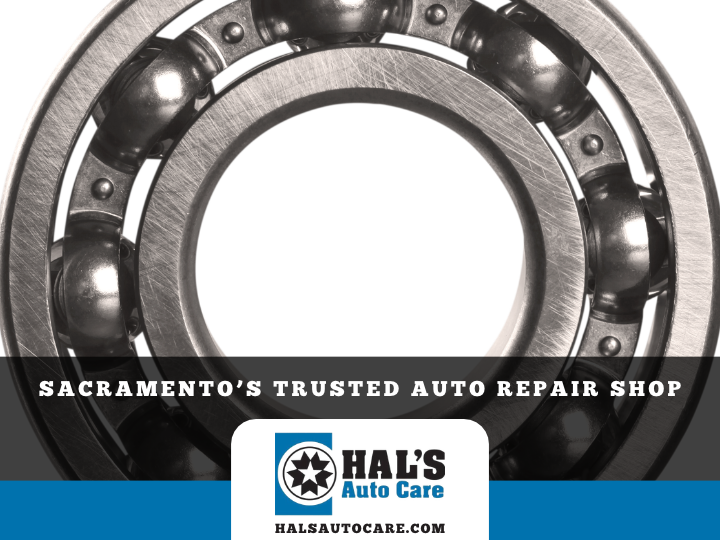
A worn wheel bearing. Each wheel spins on a sealed bearing filled with grease. Over time, heat, moisture, impacts, and age can break down the grease or damage the steel surfaces inside. The result is a hum that slowly grows into a growl and eventually a grind. A worn bearing often sounds different in curves, because shifting weight changes the load on it.
Uneven tire wear. Tires that wear in patches develop high and low spots that thump against the pavement and create a rhythmic hum. The cause is usually worn shocks or struts, alignment problems, incorrect tire pressure, or a long stretch without rotations.
One quick distinction: if the noise changes with what the engine is doing, such as when you press the gas or the transmission shifts, look toward the engine or drivetrain instead. If it tracks your road speed regardless of the engine, the wheels, bearings, and tires are the place to look.
How Urgent Is Your Humming Noise?
Here's a practical way to think about timing. These are general guidelines, not a substitute for an inspection, but they'll help you decide how soon to call.
Schedule an inspection soon
- A faint, steady hum you mostly notice at freeway speed
- No vibration, pulling, or warning lights
- The noise hasn't changed much over a week or two
At this stage, you usually have time to plan. The value of coming in now is that the repair, if one is needed, is at its simplest and least expensive.
Schedule within the week, and keep trips short
- The hum is getting louder week to week
- It clearly changes when you curve left or right
- You feel a faint vibration in the steering wheel or seat
- The tires show visible uneven wear
A noise that's changing is a noise that's progressing. Keep freeway driving to a minimum until it's checked.
Stop driving and call
- The hum has turned into grinding or a loud growl
- The steering wheel shakes or the vehicle pulls
- The ABS or traction control light came on along with the noise
- One wheel feels hot or smells like it's burning after a drive
These signs suggest a bearing that has worn far enough to affect steering, braking, or the sensors your safety systems rely on. In rare, severe cases, a failed bearing can seize or allow the hub to separate. That usually only happens after a long period of warning, but this is the stage where the warning is ending.
Why the Hum Often Shows Up on Sacramento Freeways First
Many drivers first notice a humming noise on I-80, Business 80, or US 50. That's not a coincidence.
Bearing and tire noise both increase with speed. Around town on Fulton Avenue, Watt Avenue, or Arden Way, traffic noise and lower speeds can mask a hum that's been building for weeks. Once you're cruising at freeway speed, it rises above the background.
Freeway pavement also varies. Driving from older concrete onto newer asphalt can make tire noise louder or quieter in an instant. If your hum changes sharply with the road surface, that's a clue the tires are involved. If it stays the same on every surface, a bearing becomes more likely.
Why Hybrid and Electric Vehicle Owners Notice It Sooner
We work on a lot of hybrids and EVs, and their owners often hear wheel and tire noises earlier than drivers of gas vehicles. There's a simple reason: there's less engine noise to cover it up. When a vehicle glides silently on electric power, a faint bearing hum stands out.
There are other factors, too. Many electric vehicles are noticeably heavier than comparable gas vehicles because of their battery packs, which means more load on tires and bearings. Their instant torque can also wear tires faster if rotations are skipped. And some EV tires are built with special sound-absorbing features, so replacing them with a different tire can make the cabin noticeably louder, which owners sometimes mistake for a mechanical problem.
For hybrid and EV owners, this is mostly good news. Hearing the hum early means catching the problem early.
What Valley Driving Does to Wheel Bearings and Tires
Sacramento is flat, but that doesn't make it easy on vehicles.
Extreme summer heat. Our hot afternoons bake the pavement, the brakes, and the hubs. Heat is hard on the grease inside a bearing, and years of hot summers wear on bearings that are already aging.
Short trips and stop-and-go. Errands in Carmichael, Citrus Heights, or East Sacramento mean lots of braking and frequent heat cycles at each wheel.
Winter rain and flooded gutters. When storms fill the gutters along El Camino Avenue or Fair Oaks Boulevard, the passenger-side wheels roll through the water. Technicians have long noted that passenger-side bearings tend to fail first for this reason. A hot bearing can draw moisture past an aging seal as it cools, and water breaks down grease.
Sierra trips. Weekend drives up I-80 toward the mountains, or out US 50 past Rancho Cordova, add long grades, braking heat, and loaded vehicles. Those are the conditions that push a worn bearing harder.
What Happens If You Wait Too Long?
Waiting has a cost even when the noise seems harmless.
If tires are the cause, uneven wear doesn't reverse. The noise gets louder, the tread wears faster, and the worn shock, strut, or alignment that caused it keeps working against the tires. Replacing tires without fixing the cause just starts the clock over.
If a bearing is the cause, the damage spreads. The bearing loosens, steering gets less precise, brake pads can wear unevenly, and the wheel speed sensor signal your anti-lock brakes and stability control need can become unreliable. A bearing that is replaced while humming is usually a straightforward job. A bearing that's allowed to grind can take the hub, the sensor, and nearby brake parts with it.
What a Careful Diagnosis Looks Like
Guessing at a humming noise wastes money. Here's how we approach it:
- We listen to you. When did it start? At what speeds? Does it change in curves? Did it follow new tires, a pothole, or a long trip?
- We road test it. We drive at the speeds where you hear it and make gentle curves both directions. Curving left loads the right-side wheels, and curving right loads the left side, which helps point toward the noisy corner.
- We inspect the tires. We check pressure, tread depth, and wear patterns for cupping or feathering.
- We check for play. With the vehicle lifted, we rock each wheel to feel for looseness and spin it to feel for roughness.
- We check related systems. Suspension, alignment, and brakes are inspected for wear or drag.
- We scan for codes. If the ABS or traction control light is on, we read the codes and test the sensor circuit, since wiring faults can mimic a bad bearing.
If a bearing needs replacing, it's installed with the correct torque on every fastener. Improper installation is one of the leading causes of early bearing failure, so careful workmanship protects your investment.
What Affects the Cost?
We believe in honest conversations about cost. What you'll pay depends mostly on the true cause.
If it's the tires, a rotation, balance, and alignment correction are among the most cost-effective services you can do. Badly cupped tires may need replacement, and in that case the cause of the wear should be fixed first.
If it's a bearing, the main cost factors are:
- Whether the vehicle uses a bolt-on hub assembly or a press-in bearing, which takes more labor
- Whether the hub includes an integrated wheel speed sensor
- Whether the vehicle is a hybrid, EV, all-wheel drive, or truck, which can affect parts and labor
- The condition of the brakes and surrounding components
- The quality of the replacement part
The most important cost principle is timing. A bearing replaced during the hum stage is a fraction of the cost of one that's been allowed to destroy the parts around it. If you plan to keep your vehicle for years, that's the decision that keeps cost per mile low.
If your vehicle is still under warranty, keep records of every inspection and repair. You can also check for open recalls on your vehicle identification number using NHTSA's recall lookup at nhtsa.gov/recalls.
Common Myths About Humming Noises
A lot of well-meaning advice about humming noises turns out to be wrong. Here are the ones we hear most often.
"It's just road noise." Sometimes it is. But a new hum, a hum that grows week to week, or a hum that changes in curves is not ordinary road noise. The only way to know for sure is an inspection.
"New tires will fix it." Only if the tires are the cause, and only if whatever wore them unevenly is also fixed. If the hum is a bearing, new tires won't change it at all, and you'll have spent money without solving the problem.
"If the ABS light is on, the bearing is definitely bad." Not necessarily. A damaged wire, a corroded connector, or a failed sensor can turn on the same light. Testing the circuit first is how you avoid paying for a hub that doesn't fix the light.
"Both sides always have to be replaced together." Bearings wear independently. A healthy bearing doesn't need replacing just because its partner failed. It's smart to check the other side carefully, but replacement should be based on what's found.
"If it isn't grinding, it can wait indefinitely." A hum is the early stage of bearing wear, and it doesn't get better on its own. Waiting usually doesn't save money. It moves the repair from simple to complicated.
"A hybrid or EV shouldn't have these problems." Hybrids and EVs still have wheel bearings and tires. Their weight and quiet cabins mean owners often notice these problems sooner, which is actually an advantage when it comes to catching them early.
Keeping the Hum From Coming Back
Once the cause is fixed, a few habits help keep your vehicle quiet for the long haul:
- Rotate tires on a steady rhythm based on how and where you drive, so wear stays even.
- Check tire pressure monthly and before freeway trips, since Sacramento's temperature swings change it.
- Have alignment checked after hard impacts, like a deep pothole or a curb strike.
- Mention new noises early, while they're still faint and inexpensive to address.
- Get a quick inspection before Sierra trips, when grades, heat, and load are highest.
These are small things, but over the life of a vehicle they add up to fewer surprises and a lower cost per mile.
How Hal's Auto Care Approaches a Humming Noise
Hal's Auto Care has been a family-owned part of the Sacramento community since 1979. Our approach hasn't changed in all that time: give people honest assessments, explain what matters now versus later, and protect the long-term health of their vehicles. We don't use scare tactics, and we won't recommend a repair you don't need.
Our technicians handle diagnostic testing, brakes, suspension, electrical work, and hybrid and EV repair, so we can trace a hum through every system it might involve, from the tires to the bearing to the wheel speed sensor. When we're done, you'll know exactly what we found, how urgent it is, and what your options are.
Read more about our [link to suspension service page] and our [link to hybrid and EV repair page], or [link to scheduling page] to bring your vehicle in.
Frequently Asked Questions
Is a humming noise while driving dangerous?
Not usually on the first day, but it can become dangerous if a worn bearing is left to progress. The concern grows if the hum turns into grinding, comes with vibration or pulling, or appears with an ABS light. An inspection tells you exactly where you stand.
Why is my hybrid suddenly so loud on Business 80?
Hybrids and EVs are quiet, so wheel and tire noises stand out more than in a gas vehicle. The cause could be a bearing, uneven tire wear, or a replacement tire that is louder than the original. A road test and inspection will sort out which.
Can Sacramento's summer heat wear out wheel bearings?
Heat is hard on bearing grease, and our long, hot summers add stress year after year. Heat alone rarely ruins a healthy bearing, but combined with age, a weakened seal, or moisture from winter rain, it can speed up wear.
Should I have the hum checked before a trip to Tahoe on I-80?
Yes. Long grades, braking heat, and a loaded vehicle are exactly the conditions that push a worn bearing harder. Having it inspected before a mountain trip is one of the smartest things you can do.
How much does it cost to fix a humming noise?
It depends on whether the cause is tires, a bearing, a sensor, or suspension wear. An alignment and rotation is one of the more affordable outcomes, while a hub assembly with an integrated sensor involves more parts and labor. Diagnosing first is the best way to keep the cost reasonable.
Do I need to replace both wheel bearings at once?
Not automatically. Bearings wear independently, and a healthy bearing doesn't need replacing just because the other side failed. If both sides have similar mileage, we'll check the other side carefully and tell you honestly what we find.
Can valley fog or winter rain affect my wheel bearings?
Winter rain matters more than fog. Driving through flooded gutters and standing water while the bearings are hot can draw moisture past aging seals as they cool. Over time, that moisture breaks down the grease and leads to noise.
What should I tell the technician when I bring the car in?
Tell us the speed where the hum starts, whether it changes in left or right curves, whether it changes on different pavement, and when it began. Mention any recent pothole hits, curb strikes, new tires, or long trips. Those details make the diagnosis faster and more accurate.
Know Where You Stand, Then Decide
A humming noise while driving in Sacramento is worth an honest answer about urgency, not guesswork. Whether you're driving in from Fair Oaks, Roseville, North Highlands, or Rancho Cordova, we'll find the real cause and help you decide what matters now and what can wait.
Call Hal's Auto Care at (916) 485-9215, visit us at 2425 Tower Ave, Sacramento, CA 95825, or go to https://halsautocare.com/ to schedule.
You can watch the video