Why is my ABS light on?
Why is my ABS light on?
Why Is My ABS Light On? A Complete Guide for Sacramento Drivers
Your dashboard lights are designed to communicate early—long before a small issue becomes a large problem. One of the most important warnings a vehicle can give is the ABS light, the indicator for the Anti-Lock Braking System.
When that light appears, your vehicle is telling you that a core part of your braking and stability system is no longer functioning correctly. Even if your brakes “feel fine,” a critical safety net has already been disabled.
For Sacramento drivers—especially those navigating the busy corridors around Arden-Arcade, East Sacramento, Carmichael, Fair Oaks, and North Highlands—ABS is essential. Daily driving involves sudden stops, unpredictable traffic, and mixed road conditions, making traction and braking control more important than most people realize.
This guide gives you the complete breakdown:
• What ABS is and why it matters
• The most common reasons the ABS light turns on
• How your braking performance changes when it’s illuminated
• What happens if you ignore it
• Why ABS issues are common in Sacramento’s climate and road environment
• How professional diagnostics work
• And how a trusted local Sacramento shop can fix the problem correctly
Let’s begin by understanding what the ABS system does—and what it means when it stops working.
What the ABS Light Actually Means
ABS stands for Anti-Lock Braking System, the technology that prevents your wheels from locking during hard or sudden braking. When your wheels lock up, the tires slide instead of gripping the road, which leads to:
• Loss of steering control
• Longer stopping distance
• Potential skidding or fishtailing
• Greater risk during wet or uneven conditions
ABS automatically pulses brake pressure at each wheel, keeping them turning just enough to maintain traction.
When the ABS light turns on, your vehicle’s computer has detected a failure somewhere in the system. That failure could be electrical, mechanical, hydraulic, or sensor-related.
Your normal brakes still work—but the added layer of traction control and emergency stability is gone.
What Causes the ABS Light to Come On?
ABS systems require precise information from multiple components. When any part of the system detects inconsistency or malfunction, the warning light turns on.
Here are the most common causes, explained clearly and accurately.
1. Faulty Wheel Speed Sensor
Each wheel has a sensor that measures its rotation speed. The ABS system depends on this data to prevent lock-up.
Wheel speed sensors commonly fail due to:
• Dirt and debris
• Corrosion
• Wiring wear
• Heat exposure
• Road vibration
Sacramento’s mix of city driving, construction zones, and uneven pavement—especially around Watt Avenue, Marconi Avenue, and El Camino—often exposes sensors to debris and vibration.
2. Damaged or Dirty Tone Ring
A tone ring (or reluctor ring) works with the wheel speed sensor to calculate wheel speed. When the tone ring is:
• Cracked
• Rusted
• Loose
• Clogged with debris
…the system receives incorrect data and triggers the ABS light.
Older vehicles in areas like Carmichael, Fair Oaks, and Citrus Heights often experience tone ring wear due to heat cycles and aging metal.
3. ABS Module or Controller Failure
The ABS module is the brain of the system. When it fails, ABS can’t operate.
Common causes include:
• Internal corrosion
• Electrical failure
• Pump motor burnout
• Grounding issues
• Software errors
Module failure typically results in the ABS light staying on steadily.
4. Low Brake Fluid
ABS depends on proper hydraulic pressure. Low fluid triggers the ABS warning.
Causes include:
• Worn brake pads
• Fluid breakdown
• Small leaks
• Faulty seals
Sacramento heat accelerates fluid degradation, especially for vehicles parked outdoors.
5. Blown Fuse
The ABS function relies on dedicated electrical fuses. A blown fuse interrupts power to the ABS module.
This may occur due to:
• Voltage spikes
• Moisture intrusion
• Aging circuits
Even when the cause is small, ABS cannot function until the fuse and the underlying issue are resolved.
6. ABS Pump or Hydraulic Unit Failure
The pump regulates pressure during anti-lock activation. When it fails, ABS cannot operate.
Signs include:
• Odd pedal feedback
• ABS activating at unusual times
• Inconsistent braking feel
Pump motors can fail from age or electrical wear.
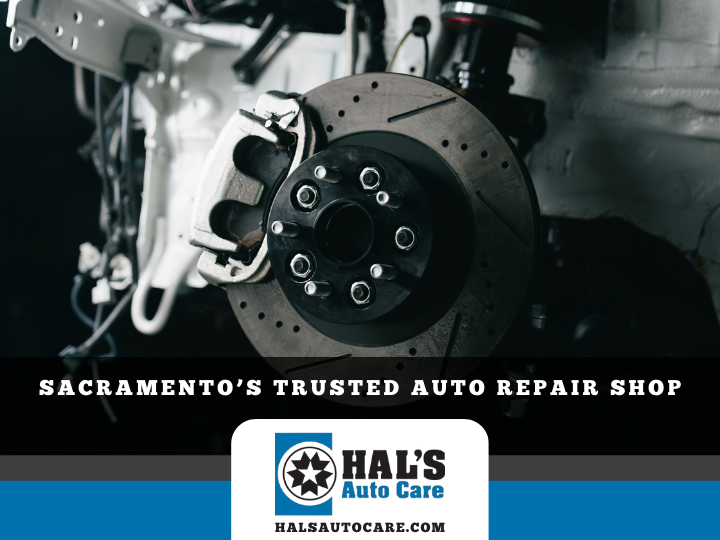
7. Worn Brake Pads or Rotors
Even though this typically triggers the brake warning light, extreme brake wear affects the hydraulic pressure ABS requires.
Busy areas like Howe Avenue, Arden Way, and Fulton Avenue cause frequent braking cycles that accelerate pad wear.
8. Battery or Voltage Issues
ABS modules require stable voltage. Weak batteries, alternator issues, or voltage dips can cause ABS malfunctions.
Sacramento summers are notoriously hard on batteries—heat shortens battery lifespan significantly.
9. Incorrect Tire Sizes
ABS needs accurate wheel speed data. If tires are mismatched or incorrectly sized, the system receives inaccurate readings.
This is common after replacing only one or two tires or installing aftermarket wheels.
10. Traction Control or Stability Control Problems
ABS, traction control, and stability control are interconnected systems.
A failure in one often affects the others, causing multiple warning lights.
What Happens If You Ignore the ABS Light?
While your brakes still function, your safety margin decreases significantly when ABS is disabled. Here’s what you lose:
1. Reduced Steering Control
ABS allows you to steer during emergency braking. Without it, locked wheels reduce your ability to turn.
This is especially dangerous during sudden stops on:
• I-80
• Business 80
• Howe Avenue
• Watt Avenue
• Arden Way
2. Increased Risk of Skidding
Locked wheels slide instead of grip. Skidding becomes far more likely:
• During rain
• On oil-coated intersections
• On uneven pavement
• When braking downhill
Sacramento’s first-rain-of-the-season conditions are infamous for slick roads.
3. Longer Stopping Distances
ABS helps balance brake pressure across wheels.
Without it, you may need more distance to stop—especially with unexpected red lights or sudden congestion.
4. Traction Control Loss
ABS and traction control share components. Ignoring the ABS warning often disables traction control as well.
This affects:
• Cornering
• Acceleration
• Vehicle stability
Why ABS Problems Are Common in Sacramento
Sacramento’s environment, climate, and road conditions create predictable patterns of ABS wear.
1. Heat Exposure
Sacramento’s hot summers strain ABS components by:
• Weakening wiring
• Corroding connectors
• Accelerating brake fluid breakdown
• Stressing ABS modules
Vehicles parked outdoors in areas like Arden-Arcade, Carmichael, and North Highlands experience more ABS failures.
2. Stop-and-Go Traffic
Heavy traffic along:
• Howe Avenue
• Fulton Avenue
• Watt Avenue
• El Camino Avenue
• Arden Way
• I-80 and Business 80
…causes constant braking cycles, increasing wear on sensors, pads, and hydraulic components.
3. Construction Zones and Road Debris
Roadwork around Sacramento—particularly Arden-Arcade and East Sacramento—creates debris that contaminates wheel sensors and tone rings.
4. Temperature Swings
Cool nights plus hot days create expansion and contraction in:
• Tone rings
• Sensors
• ABS modules
This leads to cracks, corrosion, and failure over time.
5. Aging Vehicle Population
Sacramento has many older vehicles, especially in suburban areas.
Older ABS systems are more prone to:
• Wiring wear
• Module failure
• Pump motor breakdown
• Tone ring rust
Signs Your ABS Issue Requires Immediate Diagnosis
If you experience:
• ABS light on continuously
• Traction control warnings
• Pulsation during braking
• Grinding or clicking noises
• Stopping feels different
• ABS activating at low speeds
• Steering instability while braking
…you need professional diagnostics immediately.
ABS problems don’t disappear—they progress.
What Proper ABS Diagnostics Should Include
Accurate diagnosis requires professional tools—not basic scanners.
Proper ABS inspection includes:
• Factory-level scan tool diagnostics
• Wheel-speed sensor analysis
• Tone ring inspection
• Hydraulic pressure testing
• Brake fluid quality testing
• ABS pump motor testing
• Electrical continuity checks
• Live data monitoring
Because ABS affects multiple systems, proper diagnostics prevent unnecessary repairs and restore full safety functionality.
Sacramento Roads That Stress ABS Systems
ABS is pushed hardest on roads involving:
• Frequent braking
• Rough pavement
• Unpredictable traffic
• Curves and intersections
Key examples include:
• Arden Way
• Howe Avenue
• Fulton Avenue
• Marconi Avenue
• Watt Avenue
• El Camino Avenue
• Business 80
• I-80 interchanges
• Fair Oaks Boulevard
• Sunrise Boulevard (Citrus Heights)
• Hazel Avenue (Rancho Cordova area)
These roads combine speed changes, congestion, heat exposure, and vibration—conditions that wear ABS components faster.
When to Contact a Professional
If your ABS light stays on longer than a short drive—or appears intermittently—schedule diagnostics immediately.
ABS is a safety system. It’s designed to protect you during the moments you least expect. Once impaired, its protection is gone until repaired.
ABS Diagnostics and Repair in Sacramento, CA
When your ABS light comes on, you need clarity and accuracy—not guesswork.
Hal’s Auto Care, located in the heart of Sacramento, provides advanced ABS diagnostics and complete brake system services for all makes and models.
Visit or contact:
Hal’s Auto Care
2425 Tower Ave
Sacramento, CA 95825
(916) 485-9215
https://halsautocare.com/services/
Their technicians use professional diagnostic tools capable of reading ABS codes, graphing wheel-speed data, testing hydraulic pressure, evaluating tone rings, and inspecting electrical pathways throughout the system.
Whether you're driving through Arden-Arcade, East Sacramento, Carmichael, Fair Oaks, North Highlands, Citrus Heights, Rancho Cordova, or anywhere across the greater Sacramento region, Hal’s Auto Care provides the precision needed to restore full braking control and system stability.
Final Thoughts
Your ABS light is one of the most important warnings your vehicle can give. It indicates that a core safety system is no longer functioning at full strength.
In Sacramento—where heat, stop-and-go traffic, construction zones, and unpredictable driving patterns affect every mile—maintaining ABS health is crucial.
If your ABS light is on, have it inspected as soon as possible. A proper diagnosis protects your braking performance, traction, and overall safety.
You can watch the video